
Come visit the construction site of the new premises for the League Against Cancer.
Since January 1st, 2022, the RE2020 standard has come into force, replacing RT 2012, whose primary objective is to reduce energy consumption in housing. The RE2020 will adopt the same objectives, but with a greater focus on environmental and energy aspects. Only new constructions are affected. Consequently, the construction of individual homes will be significantly impacted by this new standard. Its adoption will lead to a gradual transformation towards passive house construction.
The experts at EUROMAC2, a French leader in the manufacture of insulating materials for passive construction with a presence in France and Europe, have fully integrated these new challenges and explain how RE2020 will guide construction towards a passive approach.
What are the key differences between RT 2012 and RE2020?
Having come into force on January 1, 2022, the Environmental Regulation 2020 replaces Thermal Regulation 2012. Its adoption better addresses the environmental challenges of the real estate construction sector. For information, RT 2012 primarily aims to limit the energy needs of any dwelling. RE2020, an evolved form of RT 2012, goes much further and therefore presents notable differences:
- Reduction of greenhouse gas emissions throughout the life cycle of the dwelling, from its construction to its demolition.
- Use of bio-based materials in new construction, as they are low-carbon and thus more environmentally friendly. It is important to note that the use of these materials is not immediate and will be implemented gradually, phased over several years: 2025, 2028, and 2031.
- Reduction in the installation of gas boilers in favor of heat pumps, which allow for energy renewal. In the case of individual house construction, pellet boilers and electric heating systems are permitted.
- Consideration of summer comfort with a discomfort temperature not to be exceeded over a determined period.
The RE2020strongly encourages theconstruction of passive houseswith both economic and ecological objectives. These objectives are togenerate as few greenhouse gases as possibleandto be energy-efficient, particularly through the use of insulating materials from the design stage onward. A passive house can also be designed toproduce more energy than it consumes. In this case, the house becomes a positive-energy orBEPOShome.
How does EUROMAC2 integrate RE2020 into passive house construction?
For over 45 years, we have been building passive houses with an ecological dimension. We have integrated the requirements of the RT2012 and RE2020 standards into our construction approach. The EUROMAC2 passive house construction system provides solutions that meet the requirements of current standards. Furthermore, our system benefits from the German Passivhaus label, which certifies its energy performance.
We use materials with exceptional constructive performance, ready for RE2020.
Expanded polystyrene (EPS) is a material that offers numerous advantages for the construction of low-energy buildings. It is very lightweight and easy to handle, yet also highly resistant to compression. For insulation, it has a low thermal conductivity index, making it highly insulating. This allows it to ensure the thermal insulation of the entire house. It is also simple to install and can adapt to various types of construction.
RE2020 provides for an improvement in thermal insulation. This can result in better insulation of ground floors and roofs, as well as an optimization of the building's thermal inertia, which helps protect against both cold and heat.
Will the regulation promote innovation in construction?
New buildings will have to meet the objectives of drastic reduction in greenhouse gas emissions, and consequently, energy efficiency objectives. New construction will need to be more energy and carbon efficient. However, it will also need to produce more energy than before to meet its own needs. The energy uses selected for RE2020 include heating, cooling, domestic hot water, ventilation, lighting, and power supply for elevators, garages, parking lots, and escalators.
To achieve these objectives, RE2020 requirements are strengthened for carbon emissions from new buildings.
The carbon footprint of construction materials and products is reduced through the use of bio-based materials (wood, hemp, etc.), by reducing the use of hazardous substances in buildings, and through ecodesign. RE2020 also sets an objective for the evolution of building energy performance compared to 2020, by integrating greenhouse gas emissions linked to building energy consumption, as well as their atmospheric pollutant emissions, particularly volatile organic compounds.
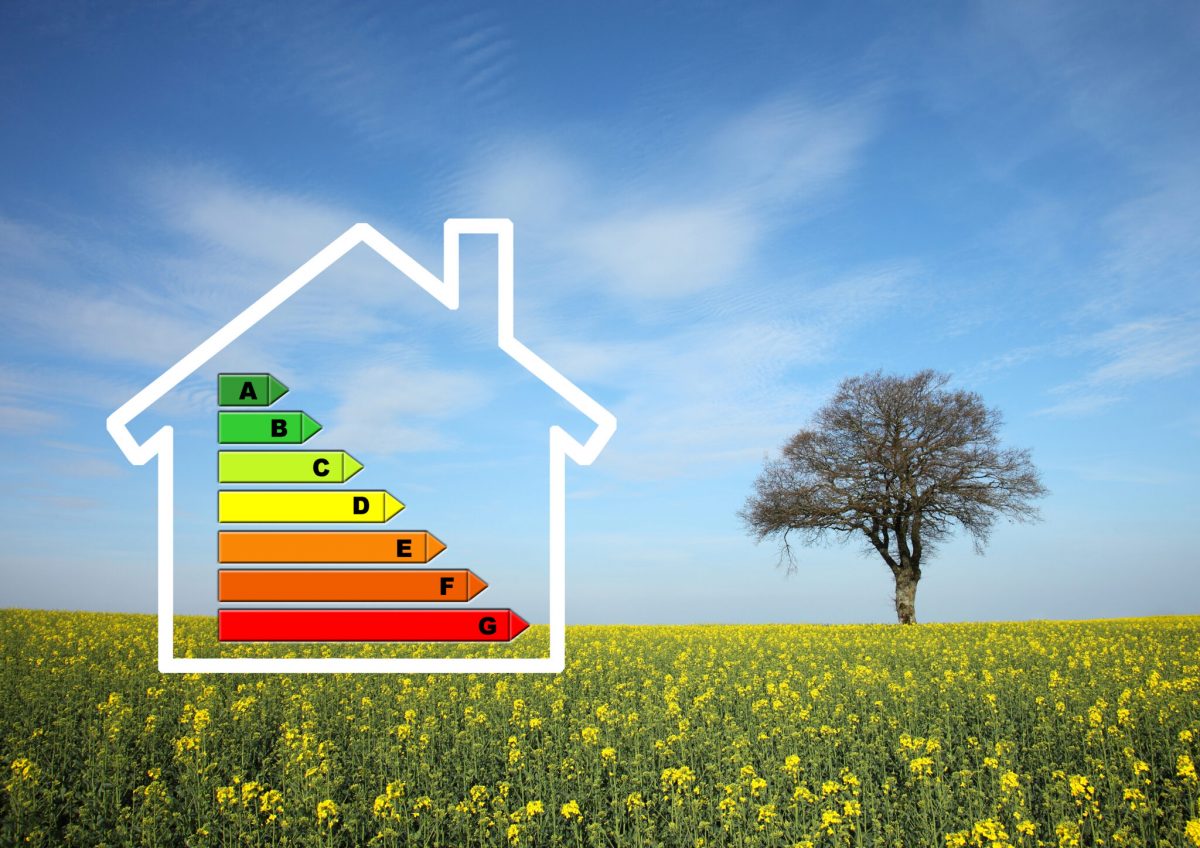
Complying with RE2020 makes construction more environmentally responsible.
In practice:
To obtain HPE renovation or BBC renovation certification (or "low-energy building" level), it is mandatory to use specific materials (insulation, joinery, heat pump, ventilation, etc.).
To obtain HPE construction or BBC construction certification (or "low-energy building" level), specific equipment must be used.
To ensure HPE or BBC certification, buildings must utilize at least one renewable energy source.
For heating and cooling, RE2020 requires dwellings to be energy-positive. This necessitates building owners to implement more innovative and ecological energy systems such as:
- heat pumps or hybrid boilers
- wood heating and urban heating networks
- combined solar systems, etc.
What is EUROMAC2's vision for RE2020?
The passive house was ahead of its time compared to RE2020. For over 45 years, we have been addressing the challenges of reducing energy consumption in single-family homes, even before the various regulations were enacted (RT2005, RT2012… and then RE2020). The principle of passive construction is the use of high-performance and eco-friendly materials. A passive house is an energy-efficient home. The three main principles of RE2020 align with this approach.
- Energy efficiency and energy sobriety
- Energy decarbonization (carbon emissions must remain at a very low, or even negative, level)
- Summer comfort.