

Do you wish to spend pleasant summers in your home? With rising temperatures during summer periods and global warming showing no signs of stopping, it is now essential to consider your home's thermal inertia!
What is thermal inertia?
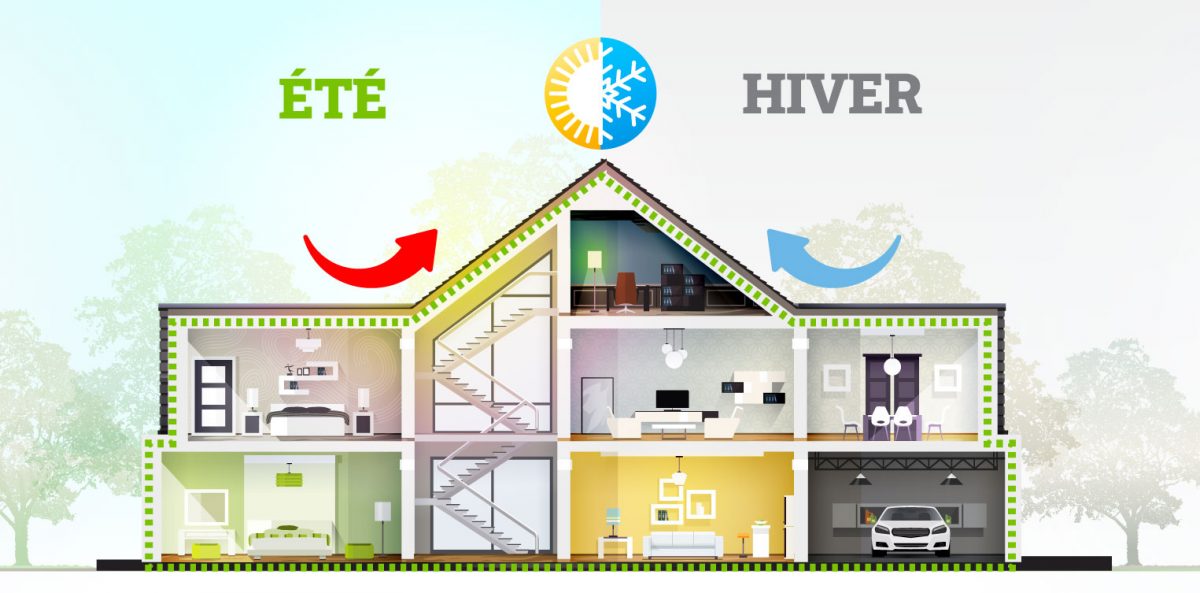
Summer thermal inertia differs from insulation. It represents a building's capacity to absorb, store, and release heat during the summer. As you know, during the hot summer months, sunlight and high temperatures lead to an increase in heat inside buildings.
Summer thermal inertia is an important concept in building design and its exterior design, as it impacts thermal comfort, energy consumption, and the performance of air conditioning systems.

The thermal inertia of concrete
Concrete is known for its ability to store and release heat, making it a material with high thermal inertia. Its thermal inertia is estimated between 2400 and 2,610 Kilojoules per m3 per degree (KJ/m3.K). For example, its capacity is two and a half times greater than that of structural timber (960 KJ/m3.K) and four times greater than that of terracotta (630 KJ/m3.K).
Concrete's high density allows it to absorb heat during periods of overheating and release it when the ambient temperature decreases, thereby helping to stabilize the internal temperature of buildings. This characteristic can reduce heating and air conditioning needs, thus improving overall energy efficiency.
Concrete and polystyrene: the perfect combination
The combination of concrete and polystyrene in construction offers an interesting solution to leverage the advantages of each material. EUROMAC2 insulating formwork blocks are composed of 2 polystyrene walls joined by thin metal spacers, within which concrete is poured up to floor height. You can choose different thicknesses of formwork blocks and thus select the thermal performance of your walls.
The use of high-inertia concrete combined with polystyrene insulation for exterior and interior walls allows for optimizing overall energy efficiency. You will benefit from the thermal stability offered by concrete while reducing heat loss thanks to polystyrene's insulating properties.
Bioclimatic buildings
Bioclimatic buildings are designed taking into account the specific climatic and geographical characteristics of a region. The objective is to maximize the benefits offered by the local climate, such as sunlight, prevailing winds, and seasonal temperature variations, in order to reduce energy consumption for heating, air conditioning, and lighting.
Several techniques are used in bioclimatic buildings to optimize energy efficiency. These include building orientation to maximize sunlight and minimize exposure to cold winds, the use of high thermal inertia materials to regulate temperature variations, reinforced thermal insulation to minimize heat loss, and the use of passive devices such as solar awnings, light wells, and natural ventilation. Our EUROMAC2 construction system is recommended for building bioclimatic structures due to its high thermal inertia concrete and polystyrene, which provides reinforced insulation.
Would you like more information about EUROMAC2 constructions and thermal inertia? Our teams are ready to answer all your questions!